
Welcome to our comprehensive guide to the Colossi of Memnon! As you delve into the fascinating world of ancient Egypt, the Colossi of Memnon stand tall, bearing witness to centuries of history and captivating the imagination of visitors from around the globe. This article will take you on a virtual journey to this awe-inspiring archaeological site, unraveling its enchanting secrets and shedding light on its historical significance.
The Colossi of Memnon: A Glimpse into the Past
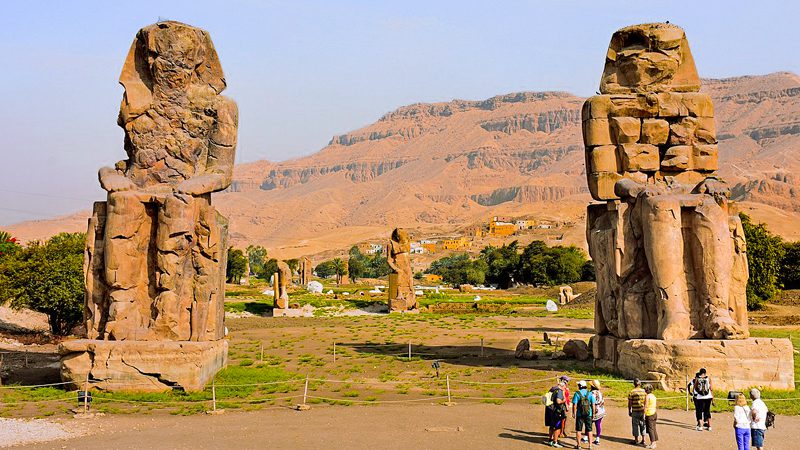
The Colossi of Memnon, located on the western bank of the Nile River near Luxor, Egypt, are two massive stone statues depicting Pharaoh Amenhotep III. These towering figures were constructed during the 14th century BCE and were once part of a grand mortuary temple dedicated to the pharaoh.
The Mythical Memnon
The statues earned their name from the Greek mythological figure Memnon, who was said to be a hero and king who fought alongside the Trojans in the Trojan War. The statues’ mysterious sounds at dawn, later debunked, were believed by the ancient Greeks to be the lamentation of Memnon’s mother, Eos, the goddess of dawn.
Monumental Dimensions
The Colossi of Memnon are colossal in every sense of the word, each standing approximately 18 meters high and weighing around 720 tons. These monolithic statues were carved from a piece of quartzite sandstone and expertly adorned with intricate details.
Sculptural Masterpieces
The statues depict Pharaoh Amenhotep III seated on a throne, wearing royal regalia, and exuding an air of authority and power. The attention to detail is remarkable, with finely chiseled facial features, intricately carved hieroglyphics, and depictions of the pharaoh’s divine connections.
Ancient Fame and Visitors
Throughout history, the Colossi of Memnon attracted numerous visitors, including notable figures such as Roman emperors Hadrian and Septimius Severus. Many left their mark on the statues by inscribing their names, dates, and admiration into the stone.
Modern-Day Restoration Efforts
Over time, the Colossi suffered significant damage from various factors, including natural disasters and human activities. However, ongoing restoration efforts aim to preserve and safeguard these magnificent monuments for future generations, ensuring their historical and cultural legacy endures.
Mortuary Temples and the Afterlife
The Colossi of Memnon was once part of a vast mortuary temple complex dedicated to Pharaoh Amenhotep III. These temples held immense religious and symbolic significance, serving as a place of worship, commemoration, and the pharaoh’s eternal resting business.
Historical Insights and Artistic Influences
Studying the Colossi of Memnon provides valuable insights into ancient Egypt’s religious beliefs, artistic styles, and architectural techniques. They showcase the mastery of Egyptian artisans and the profound influence of the pharaohs on art and culture during this era.
Conclusion
In conclusion, the Colossi of Memnon are silent sentinels, bridging the gap between the ancient and modern worlds. Their grandeur, historical significance, and mythical allure make them a must-visit destination for history enthusiasts, archaeology aficionados, and curious travelers. As restoration efforts continue, these majestic marvels will inspire awe and admiration for future generations. Plan your visit to the Colossi of Memnon and embark on a captivating journey through the splendors of ancient Egypt.
FAQs For Colossi of Memnon in Luxor:
What is the best time to visit the Colossi of Memnon?
The Colossi of Memnon can be visited year-round. Still, the best time to visit is during the cooler months of October to April when the weather is more pleasant for exploring the archaeological site.
Are there any entrance fees to visit the Colossi of Memnon?
Yes, there is an entrance fee to visit the Colossi of Memnon. The fee may vary for international visitors and locals. It is advisable to check the current rates before your visit.
How can I get to the Colossi of Memnon from Luxor?
The Colossi of Memnon are located on the western bank of the Nile River near Luxor. You can easily reach the site by hiring a taxi, taking a local bus, or joining a guided tour from Luxor. The journey takes approximately 20-30 minutes, depending on traffic.
Can I take photographs of the Colossi of Memnon?
Yes, photography is allowed at the Colossi of Memnon. Feel free to capture the majestic statues and the surrounding archaeological site. However, it’s always respectful to check with your guide or the site authorities if any specific restrictions are in place.
Is there any accommodation available near the Colossi of Memnon?
The Colossi of Memnon are located near Luxor, where you can find various accommodation options that suit various budgets and preferences. Luxor offers hotels, guesthouses, and resorts that cater to the needs of tourists.
Can I climb or touch the Colossi of Memnon?
Climbing or touching the Colossi of Memnon is not allowed for visitor safety and to preserve historical artifacts. It’s essential to respect the site and its preservation efforts by observing from a designated area and refraining from physical contact with the statues.