
Welcome to The Ramesseum, a captivating testament to the grandeur of Ancient Egypt’s past. Situated on the west bank of the Nile River in Luxor, Egypt, this magnificent temple complex is a vivid reminder of the once-thriving civilization that flourished thousands of years ago. Built-in honor of Pharaoh Ramses II, the Ramesseum represents remarkable architectural prowess and artistic mastery.
In this comprehensive guide, we invite you to embark on a virtual journey to explore the wonders of the Ramesseum. From its historical significance to the awe-inspiring structures within its walls, prepare to be enchanted by the tales of ancient royalty, religious rituals, and remarkable craftsmanship that await.
Historical Significance and Cultural Context
To truly appreciate the Ramesseum, one must delve into its historical significance and understand its cultural context. Pharaoh Ramses II, often regarded as one of Egypt’s most influential rulers, commissioned the temple during the 13th century BC. Serving as a mortuary temple for the pharaoh’s worship and a place for funerary rites, the Ramesseum was dedicated to the god Amun.
Ramses II’s reign marked an era of political stability and monumental construction projects in ancient Egypt. As a military leader, diplomat, and visionary, Ramses II left an indelible mark on Egypt’s history. The Ramesseum is a testament to his desire to immortalize his legacy and assert the divine authority of the pharaohs.
Architectural Marvels
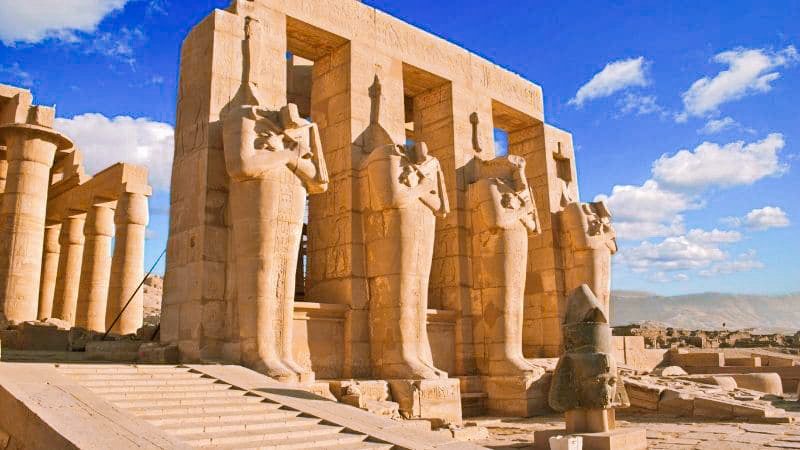
The Ramesseum’s architectural marvels astound visitors to this day. The temple’s colossal pylons and imposing facade command attention and evoke a sense of awe. As you venture through its vast halls and courtyards, you’ll encounter intricate reliefs depicting scenes from the pharaoh’s life, mythological tales, and religious ceremonies.
One of the most iconic features of the Ramesseum is the Great Hypostyle Hall, an expansive space adorned with towering columns and intricately carved reliefs. These reliefs provide glimpses into the rituals and customs of ancient Egypt, offering invaluable insights into the spiritual beliefs and practices of the time.
Exploring the temple further, you’ll discover the sanctuaries dedicated to various deities, including Amun, Ptah, and Re-Horakhty. Each sanctuary offers a unique experience, showcasing the significance of these gods within the ancient Egyptian pantheon.
Preservation Efforts and Restoration
Over the centuries, the Ramesseum has faced numerous challenges, including natural disasters, human intervention, and the passage of time. However, concerted efforts have been made to preserve and restore this historic gem.
In recent years, restoration initiatives have focused on stabilizing the temple’s structures, cleaning its intricate reliefs, and ensuring its long-term survival. These efforts not only protect the Ramesseum but also enable visitors to experience the splendor of ancient Egypt as it was intended.
Visiting the Ramesseum Today
Today, the Ramesseum welcomes visitors worldwide, allowing them to immerse themselves in the rich tapestry of ancient Egyptian history and culture. As you explore the temple complex, expert guides provide captivating insights into its historical significance and architectural wonders.
The Ramesseum is a destination for history enthusiasts and those seeking to understand a bygone era’s intricate beliefs and rituals. It serves as a bridge connecting the past to the present, offering a glimpse into the extraordinary world of the pharaohs.
Conclusion
The Ramesseum is an enduring symbol of ancient Egypt’s power, glory, and ingenuity. Its majestic architecture, intricate reliefs, and historical significance make it a must-visit destination for travelers eager to delve into the mysteries of this remarkable civilization. By exploring the Ramesseum, we unlock the secrets of an ancient world and gain a deeper appreciation for the timeless legacy left by Pharaoh Ramses II.
As you plan your journey to Egypt, include the Ramesseum on your itinerary. Discover the wonders of this awe-inspiring temple, where history comes alive, and the echoes of the pharaohs’ footsteps can still be heard.
So come, step into the world of the Ramesseum, and let its splendor captivate your senses as it has done for countless generations. Experience the magic of Ancient Egypt and create memories that will last a lifetime at the Ramesseum.
FAQS For Ramesseum:
What is the Ramesseum?
The Ramesseum is a temple complex in Luxor, Egypt, built in honor of Pharaoh Ramses II during the 13th century BC. It served as a mortuary temple and a place for funerary rituals dedicated to the god Amun.
What is the historical significance of the Ramesseum?
The Temple holds immense historical significance as it reflects the reign of Pharaoh Ramses II, a prominent ruler in ancient Egypt. It symbolizes the architectural prowess and political stability of the time and serves as a testament to the divine authority of the pharaohs.
What can I expect to see at the Ramesseum?
Visitors to the Ramesseum can explore a range of awe-inspiring architectural features, including colossal pylons, intricately carved reliefs, and the remarkable Great Hypostyle Hall. The temple also houses sanctuaries dedicated to various deities, offering insights into ancient Egyptian religious practices.
How has the Ramesseum been preserved and restored?
Over the years, the Temple has undergone restoration efforts to ensure its preservation. Restoration initiatives have focused on stabilizing structures, cleaning intricate reliefs, and safeguarding the temple from natural and human-induced damage.
Can I visit the Ramesseum today?
Yes, the Ramesseum is open to visitors. It offers an immersive experience for history enthusiasts and anyone interested in ancient Egyptian culture. Expert guides are available to provide insights into the temple’s historical significance and architectural wonders.
Why should I visit the Ramesseum?
Visiting the Temple allows you to witness firsthand the magnificence of ancient Egypt’s past. It offers a unique opportunity to explore the architectural marvels and learn about the rich cultural heritage of the pharaohs. It’s an experience that combines history, art, and spirituality, creating lasting memories and a deeper understanding of this extraordinary civilization.